
idana goldberg
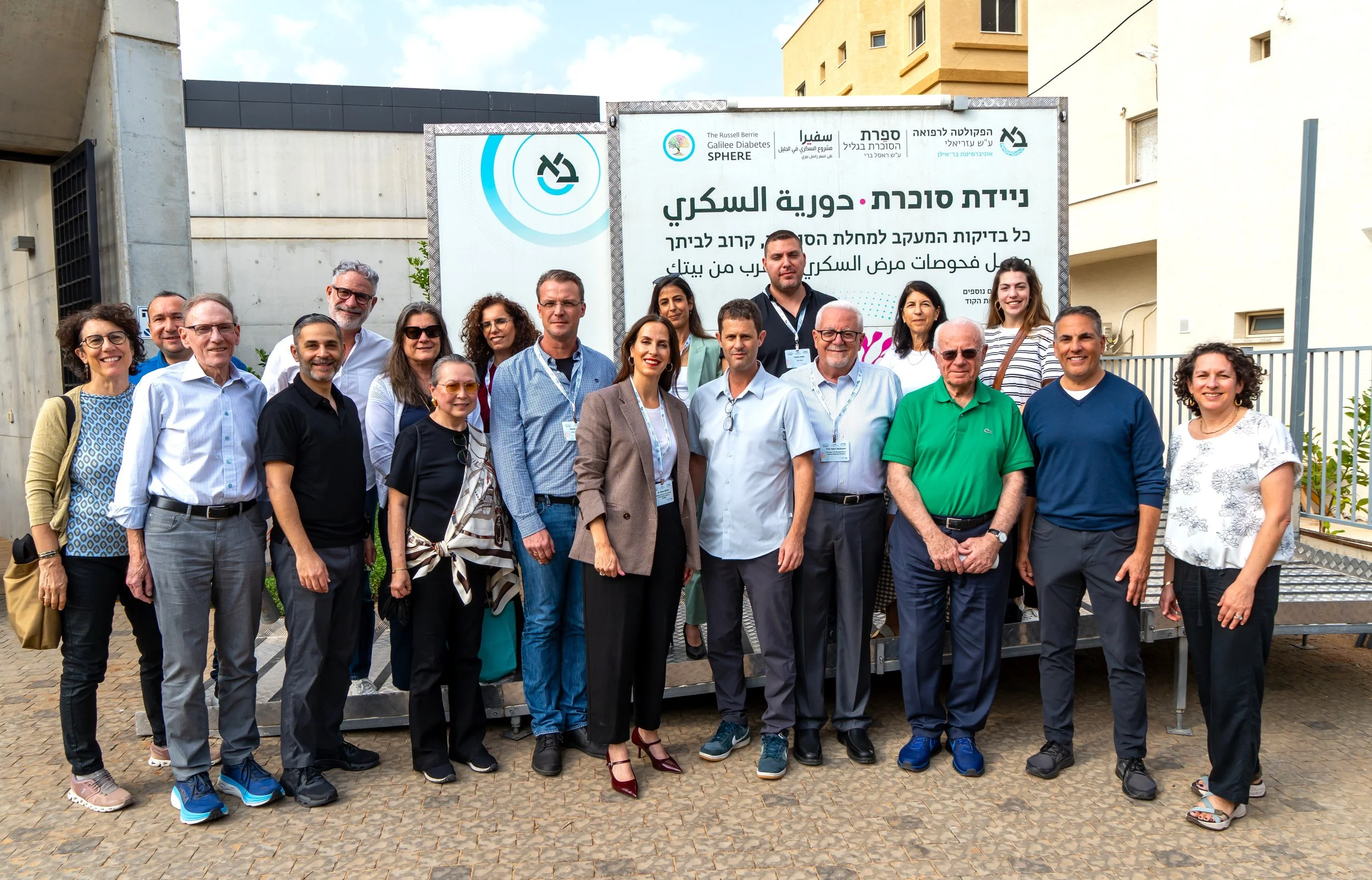
Foundation Trustees and staff join SPHERE team members and municipal officials in front of SPHERE’s mobile diabetes clinic.
This week, Jews around the world are celebrating Chanukah. As I lit candles with my family, I couldn’t stop picturing the recently released video of six hostages lighting Chanukah candles deep inside Hamas tunnels. Nicknamed “The Beautiful Six,” these young people chose to bring light, to bring tradition, into the very darkest of places. The clip also captures something essential about the past two years in Israel: the effort to maintain routine and continue religious life, to celebrate the light, even in the midst of fear and uncertainty. That they chose to kindle flames in such darkness is a testament to their resilience. That all six were later murdered by Hamas is a testament to the cruelty they faced. This week, in a chilling recurrence, as I was finalizing this piece, gunmen opened fire on a Chanukah celebration at Bondi Beach in Sydney, killing at least 15 people — including a Holocaust survivor and the rabbi who organized the event.
Jews gathering to kindle light. Jews targeted for doing so. The pattern is unbearable, and it is not abstract.
. . . . .
I was in Jerusalem the morning the ceasefire took effect and the final 20 living hostages returned home to Israel. People moved through the streets glued to their phones or stayed home watching their televisions, waiting for their first glimpses of people whose names and faces had been indelibly printed in their minds. The country seemed to take a collective breath, with relief tempered by the knowledge of how many had not, and would not, come home alive. With 251 hostages and more than 2,000 Israelis killed, the country carries the trauma collectively.
I spent five weeks in Israel this fall. The time allowed me to meet with our grantees, speak with leaders, and see both the strain and determination shaping the country. Several threads kept emerging — in conversations, in the places we visited, in the work our partners are doing on the ground.
Local Leaders Carrying Democratic Practice Forward
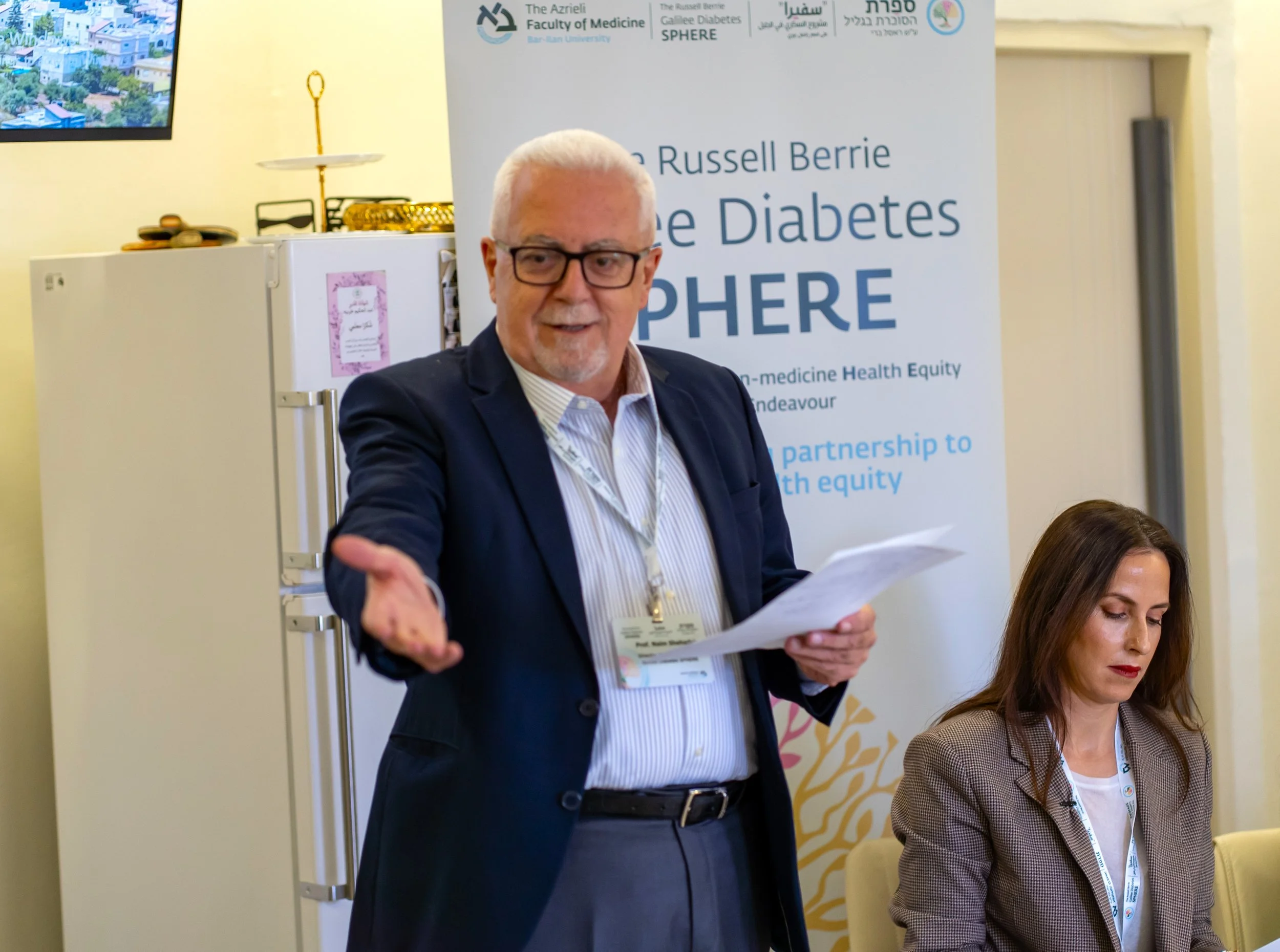
SPHERE Director Dr. Naim Shehadeh and Deputy Director Dr. Sivan Spitzer.
During COVID, the important role of local authorities in taking care of the needs of their residents became apparent; recognition that was only strengthened when the war revealed the central government to be largely absent from addressing homefront needs. Today, mayors, city council members, municipal staff and grassroots organizers are handling issues that national politics either can’t or won’t resolve quickly. They are coordinating services, providing healthcare, intervening to teach civics in their local schools, addressing polarization, and much more. And they are often doing all this without sufficient training, despite legislation that stymies their efforts, or in tension with government ministries.
The Russell Berrie Foundation’s investments in local governance and leadership — including Maoz’s Makom program, Tzedek Centers, or the Municipal Cadets program — have always been important, but this period has underscored how much of Israel’s resilience depends on these networks. They are the people who keep daily life functioning even when uncertainty and vitriol dominate the national conversation.
“The Foundation’s investments in local governance and leadership — including Maoz’s Makom program, the Tzedek Centers, or the Municipal Cadets program — have always been important, but this period has underscored how much of Israel’s resilience depends on these networks.”
Investing in Israel’s Arab Communities
Arab Israelis represent approximately one in five citizens. Despite Hamas’s efforts to draw them into the conflict, Arab Israelis have remained steadfast and largely refrained from joining the war — a fact that deserves more recognition than it has received. Yet, while they are full citizens of the state, longstanding socioeconomic gaps persist.
The Foundation has worked for more than a decade to narrow these gaps. We’ve invested in bootcamps to train Arab professionals to enter the hi-tech field and partnered with JDC Elka and the government to create Mawared, which established new positions within Arab municipalities to help them access approved funding. The Russell Berrie Galilee Diabetes SPHERE in the North partners directly with municipalities to help reduce the disproportionally high rates of diabetes and obesity that exist within Arab communities.
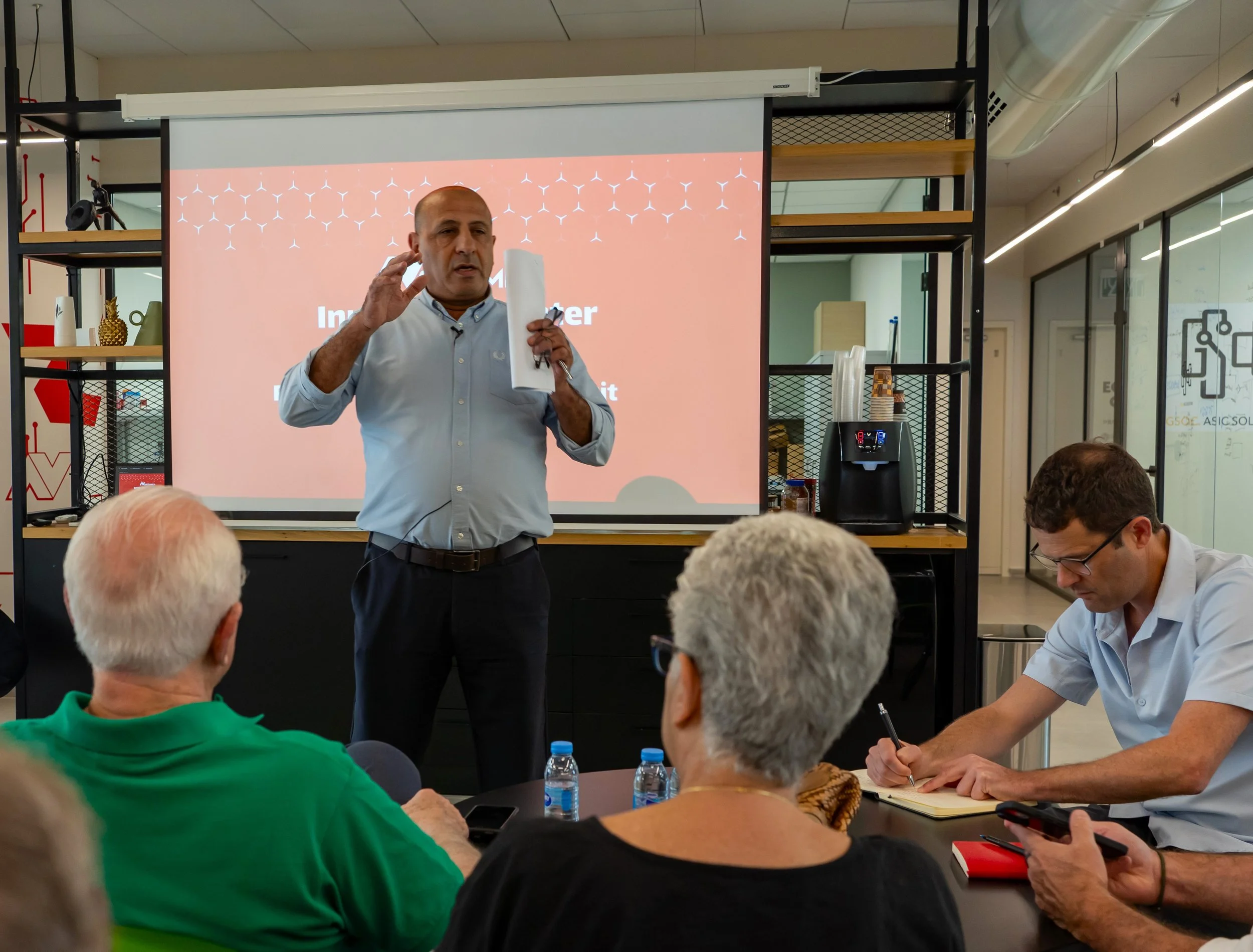
Aiman Saif, partner at the Portland Trust, provides an overview of NorthMed and Sakhnin’s med-tech ecosystem.
On this latest trip, our Trustees and staff visited Sakhnin, where we saw how these investments intersect. At NorthMed, a med-tech hub we funded through The Portland Trust, we met Arab Technion graduates now employed at high-tech companies, municipal professionals trained through Mawared who have secured increased government funding, and health workers partnering with SPHERE to bring diabetes prevention programs into local high schools.
Recent moves by coalition leaders to divert already-approved funds for Arab municipalities — including 220 million NIS redirected just this week — threaten to undo years of progress. For the people we met in Sakhnin, these are not abstract budget lines; they are the resources needed to create jobs, improve health outcomes, educate youth, and build cultural and civic infrastructure. And while the government is slowly advancing funds to rebuild the North after the devastation of the war, few of these resources will reach Arab municipalities. With roughly half of Israel’s Arab population living in these regions, efforts to rebuild cannot succeed without them.
A Rising Generation with Clear Purpose
Much of the past two years has hit the younger generation particularly hard, with them serving in the military and reserves while sustaining daily life at home. These young people are committed to building a more inclusive and resilient Israel.
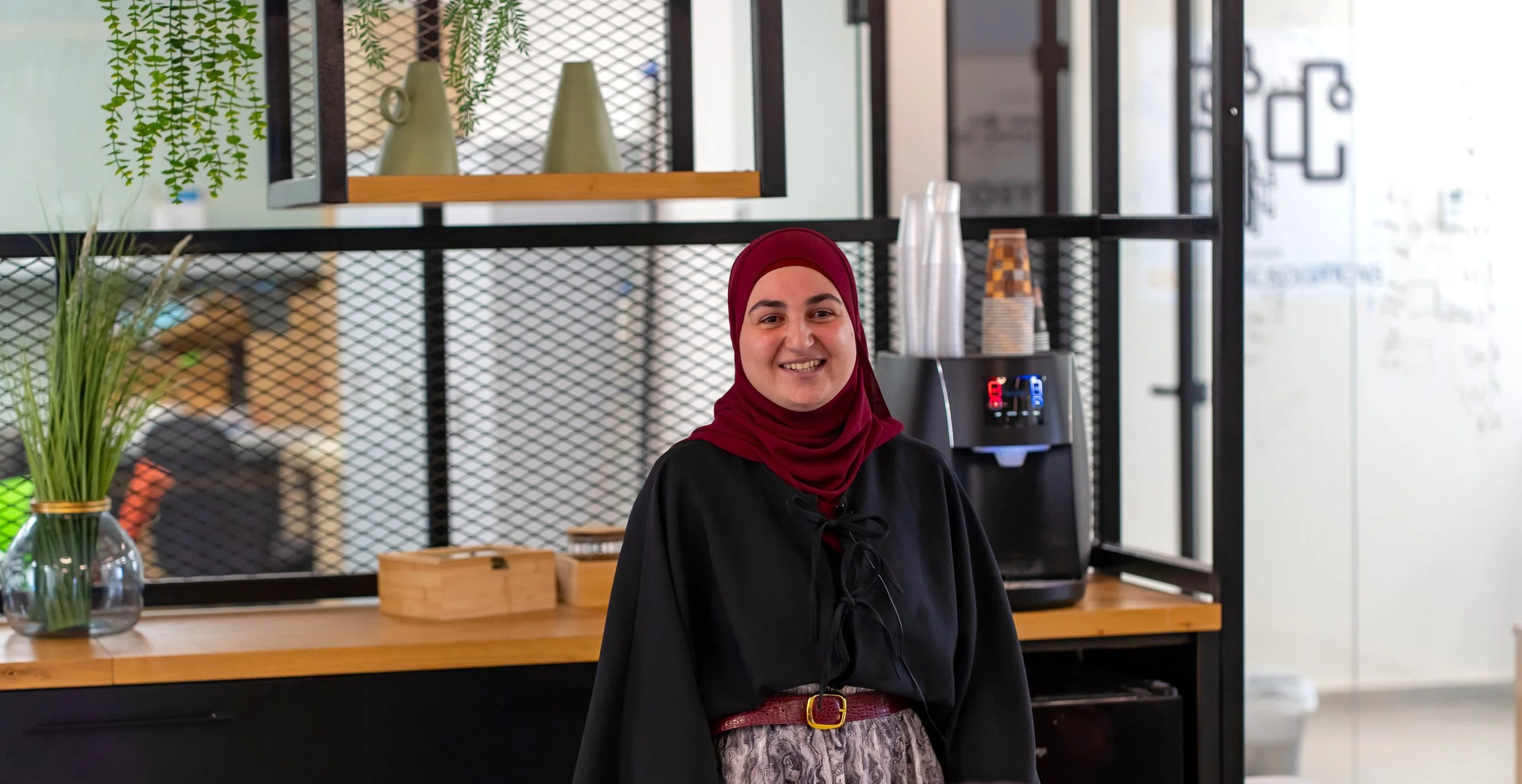
Shorok Heib works at one of the hi-tech companies in the NorthMed hub.
Among those we met were Reuven Taub, founder of Alenu, which seeks to harness “the grandchildren’s generation” to rewrite Israel’s story; Shir Nosatzki, co-founder and director of "Have You Seen the Horizon Lately?", which promotes Jewish-Arab political partnership; Naomi Niddam, a journalist who launched a unique crowdfunding model to support local investigative journalism; Amna Frej, who is empowering young Arab and Jewish girls to launch ventures in innovative green-tech; and Chen Shamir, whose Alumim program encourages young people to enter education by creating academic kibbutzim.
Each is working on a different challenge— and there are scores more like them. What they share is a grounded sense of responsibility for the country’s future and a clarity about what needs to change. They are part of a generation that insists on being defined by what they intend to build, not what history has thrust upon them. Meeting them was one of the most hopeful parts of my trip.
Looking Ahead
Five weeks in Israel did not provide answers to larger and shifting geopolitical questions, but it offered a close view of how people are coping and organizing in real time. What stayed with me most was the work happening away from the headlines — people improving health systems, strengthening local institutions, and holding their communities together.
“They are part of a generation that insists on being defined by what they intend to build, not what history has thrust upon them. ”
The needs are significant, but so is the commitment of those doing the work. They are shaping what comes next, and we are fortunate to stand alongside them.
The Beautiful Six chose to light candles in darkness. Across Israel, in municipal offices and tech hubs, in high schools and kibbutzim, others are doing the same. Not with wicks and wax, but with the hopeful, resolute effort of building what comes next.
As 2026 begins, may this steady work bring us closer to the peace we seek.